🏡 A Design Shaped by Survival
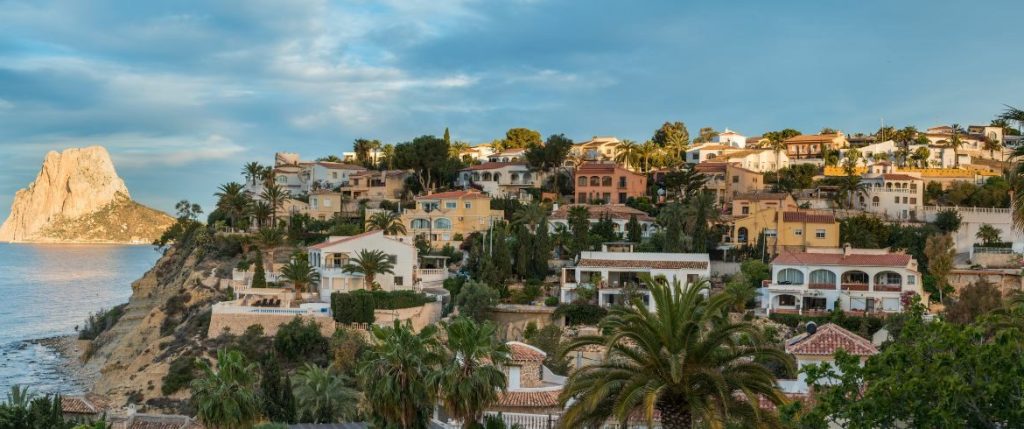
The appearance of Costa Blanca villages is not just about beauty. Their design reflects centuries of adaptation to heat, water scarcity, and coastal threats. Everything — from street width to house colour — had a purpose.
🤍 Why White Houses Dominate
Whitewashed walls reflect sunlight and reduce indoor temperatures. Before air conditioning, this was essential. Lime paint also helped repel insects and disinfect surfaces.
This explains why villages like Altea and Benissa shine brightly under the sun.
🛤️ Narrow Streets = Cooler Air
Narrow streets create shade for most of the day. They also channel wind, allowing airflow that cools homes naturally. Walking through old towns feels noticeably cooler than modern areas.
🏰 Hilltop Locations for Safety
Many Costa Blanca villages sit on hills or ridges. This wasn’t for views alone. Elevated positions allowed early warning against pirate attacks and invaders arriving by sea.
Villages like Guadalest are perfect examples.
🌳 Central Squares and Community Life
Plazas served as social, commercial, and defensive centres. Trees provided shade, while fountains offered water. These spaces still shape village life today.
🧱 Architecture That Still Works
Modern architects now copy these ancient ideas. The design of Costa Blanca villages proves that traditional solutions were smart, sustainable, and ahead of their time.