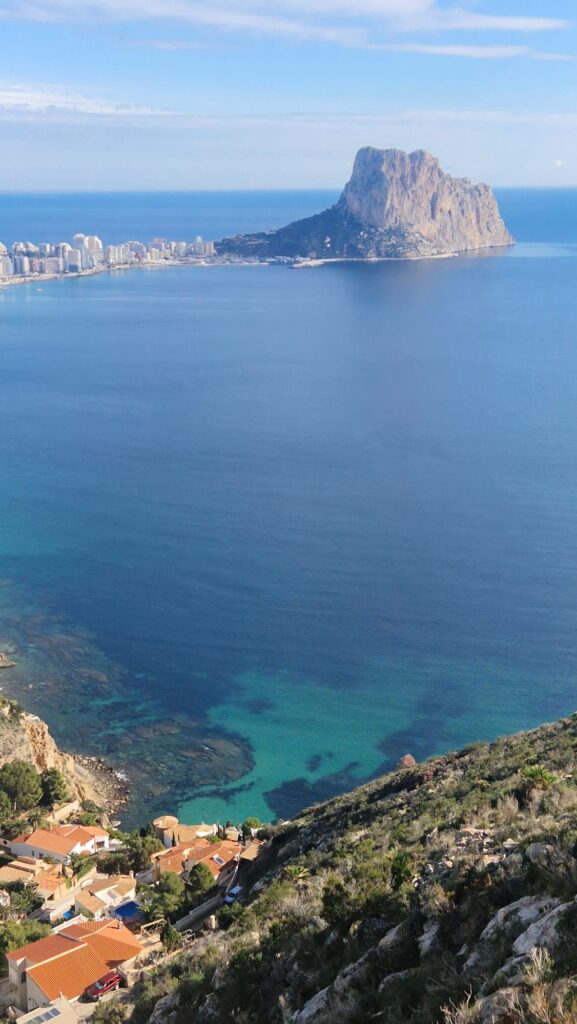
🌞 The Mystery Behind Costa Blanca Sea Colour
Many visitors notice that the Mediterranean Sea does not look the same everywhere. Along the coast, the Costa Blanca sea colour can shift dramatically within just a few kilometres. Some bays glow turquoise, while other areas appear dark blue or emerald green. This beautiful variation is not random.
🌊 Depth Makes the Biggest Difference
Shallow water reflects sunlight off the sandy seabed, creating bright turquoise tones. Deeper areas absorb more light, which results in darker blues.
That’s why shallow beaches near Calpe or Albir often look lighter than deeper bays near cliffs.
🪨 Sand vs Rock Seabeds
The type of seabed plays a major role in Costa Blanca sea colour:
-
Sandy bottoms → light turquoise water
-
Rocky seabeds → deep blue or emerald tones
-
Seagrass meadows → greenish shades
Rocky coves near Jávea and Moraira are famous for their intense colours and clarity.
☀️ Sunlight and Angle
The Mediterranean sun is strong and high in the sky for much of the year. When sunlight hits the water at certain angles, it enhances colour intensity. Early morning and late afternoon often create the most vivid blues and greens.
This is why photographers love the Costa Blanca sea colour during sunrise and sunset.
🌬️ Wind and Water Movement
Calm days allow colours to appear clearer. Wind and waves mix sand into the water, making it look darker or cloudier. Sheltered bays usually show the brightest hues.
🌊 Nature’s Living Artwork
The Costa Blanca sea colour is shaped by science, but it feels like art. Every beach and cove offers a different shade, making the coastline endlessly fascinating.